
How to Choose a Tall Aluminium Glass Display Cabinet
By Linda· Last updated: 2026/9/24
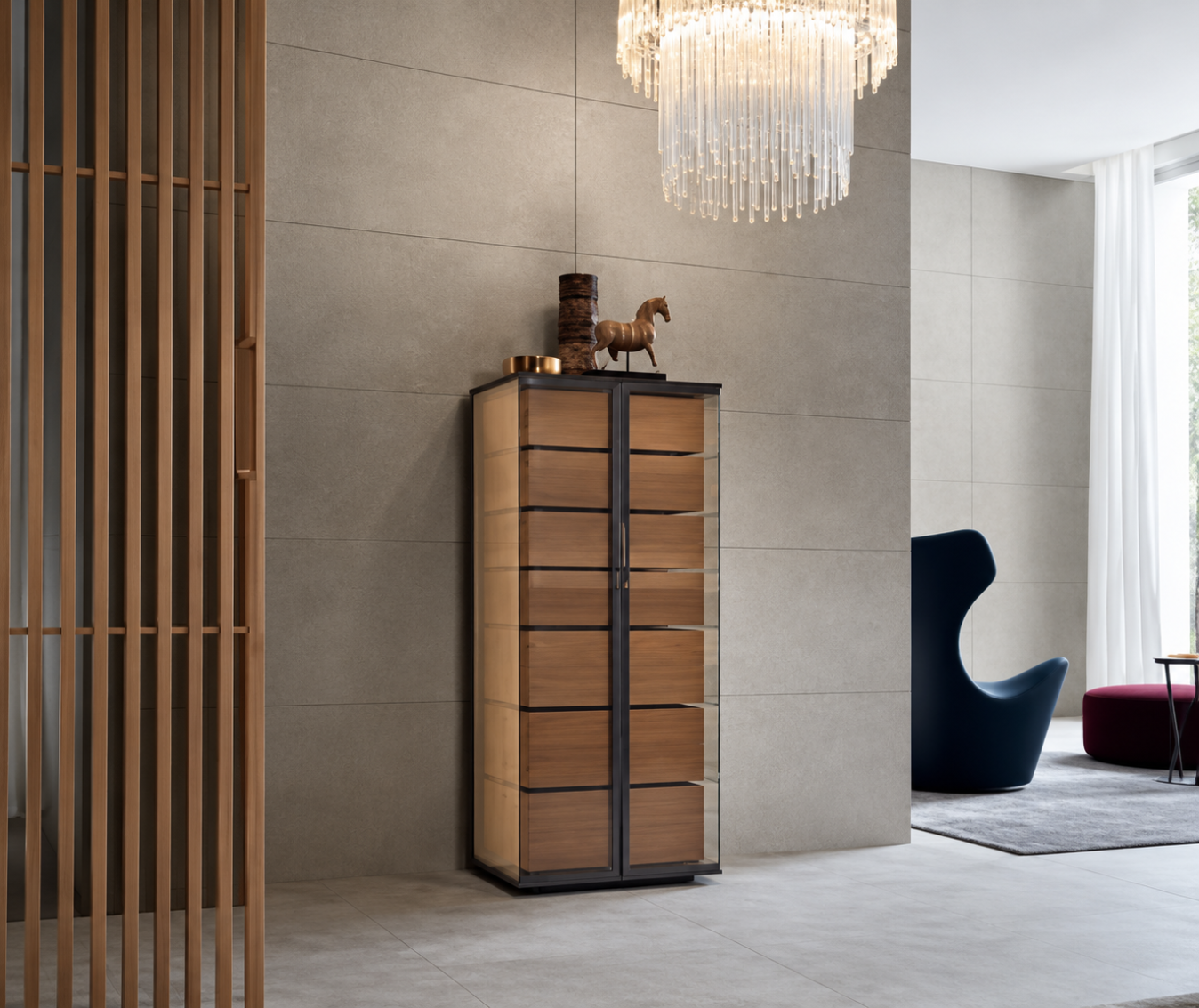
Not every room has space for a wide sideboard. A tall aluminium glass display cabinet goes up instead of out — small footprint, serious vertical storage, and a look light enough that it doesn’t crowd the room.
That’s why tall cabinets work in living rooms, bedrooms, dressing rooms, hallways, boutiques, and showrooms. Here’s what to look for before you order one.
Why Choose a Tall Aluminium Glass Display Cabinet?
The main reason is space. A tall cabinet uses vertical room that would otherwise sit empty, so you get more storage without giving up floor area. It fits narrow walls, corners, and small apartments where a wide cabinet would feel heavy or simply not fit.
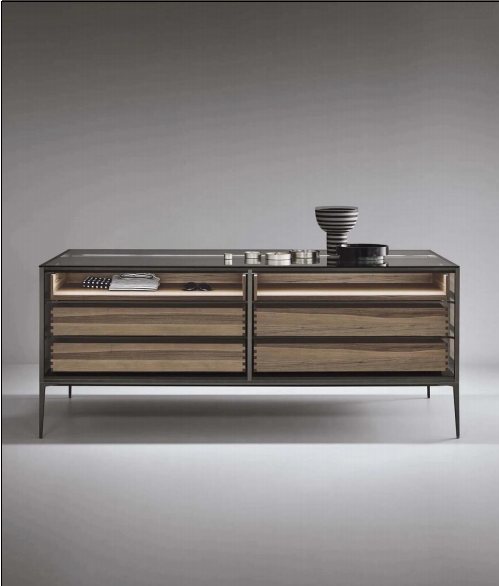
It’s also flexible. You can display objects on the upper or open sections and keep everyday items in drawers below. And because the frame is aluminium and the panels are glass, it reads lighter than a solid wood cabinet of the same height — which matters most in smaller rooms.
How Glass and Aluminium Create a Lighter Look
A tall cabinet can easily feel massive. Glass and aluminium are what keep that from happening.
Slim Frames, Open Sightlines
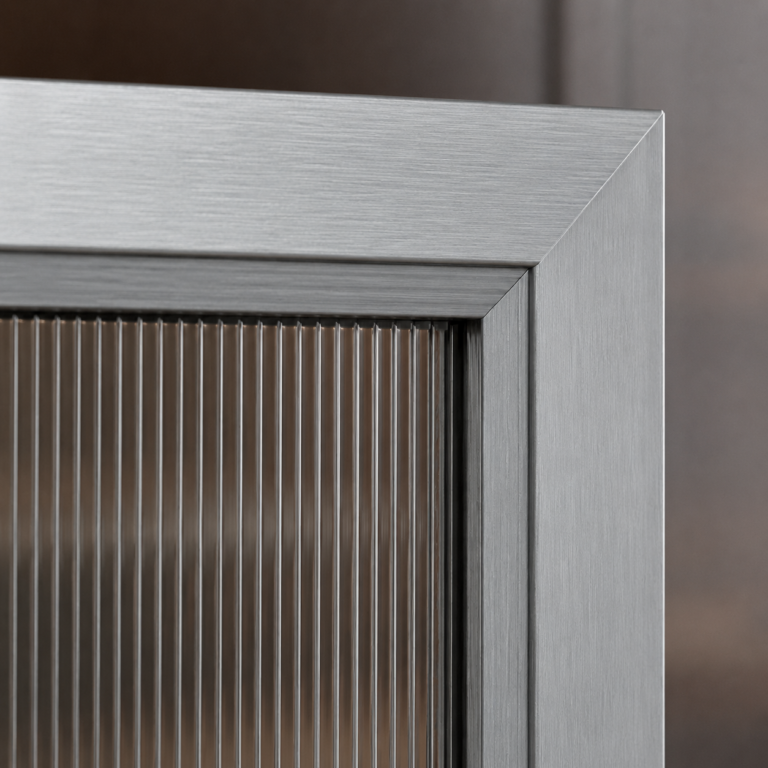
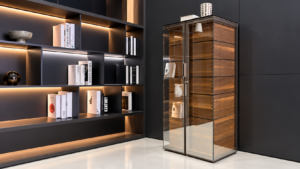
Slim aluminium profiles give the cabinet clean lines without adding bulk. Large glass panels let light pass through and around the piece, so your eye reads the contents and the room behind it, not a solid block.
Compared with a fully enclosed tall cabinet, this design reduces visual weight and makes the height feel intentional rather than heavy. If you want the full breakdown of how these materials work together, see our guide to custom aluminium glass cabinet design and buying.
Display Outside, Storage Inside
This is what makes a tall cabinet useful rather than just decorative.
A Cabinet That Does Both Jobs
Glass panels and open sections let you show tableware, books, collectibles, or personal accessories. Wood-finish drawers hide what you don’t want on view — cables, paperwork, everyday clutter.
A display cabinet doesn’t have to sacrifice practical storage. Both functions sit in one piece.
How the Wing-Opening Design Changes the Experience
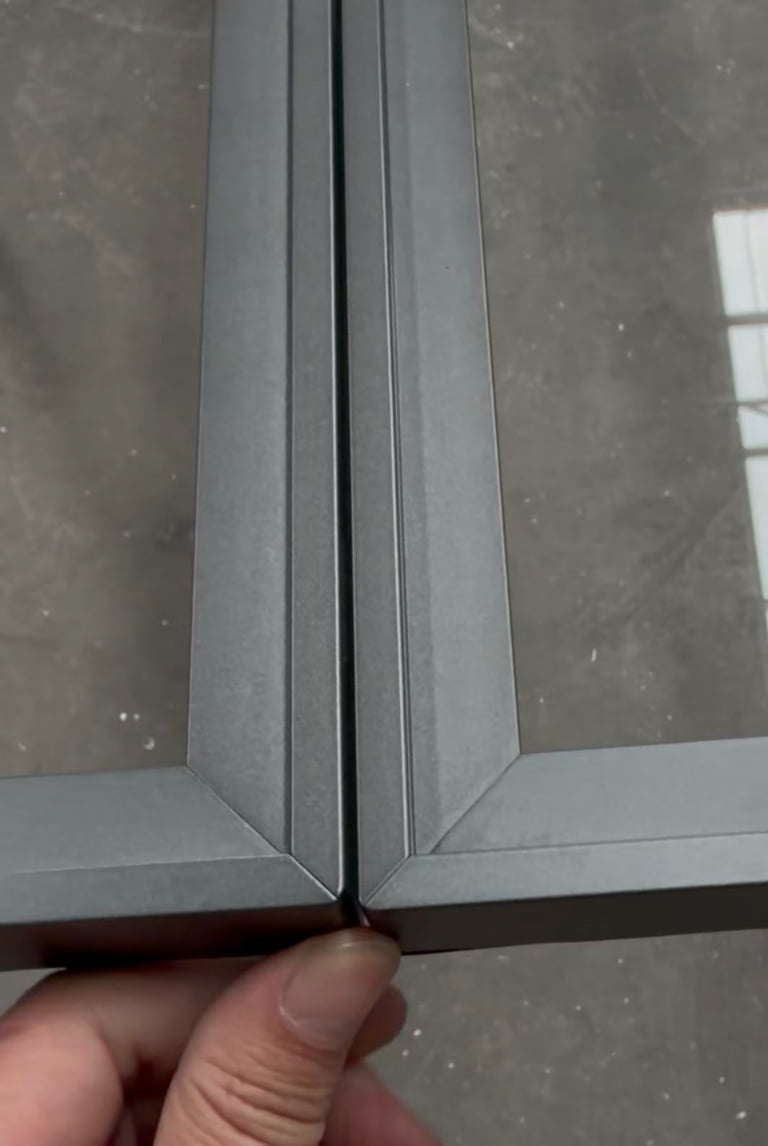
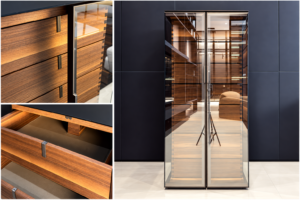
Most cabinets open one of two ways: a single door swinging to one side, or sliding panels on a track. This one opens outward from the center, like wings, giving full access to the interior from both sides at once.
Why a Wing-Opening Aluminium Glass Cabinet Works Differently
With a standard hinged door, you open one side and work around the door itself. With a wing-opening design, both sides clear at once, so the full interior is visible and accessible in one motion — useful on a tall cabinet where you’re reaching across different heights.
It also changes how the cabinet sits in the room. A door that swings sideways needs clear wall space next to it. A wing-opening design opens forward instead, so the cabinet can sit closer to a wall, a corner, or another piece of furniture.
For narrow hallways, dressing rooms, and boutique displays, that’s often the reason this format gets chosen over a standard tall cabinet. When the doors are closed, the glass front stays clean and symmetrical. When they open, the movement becomes part of the display — which works well in retail and showroom settings.
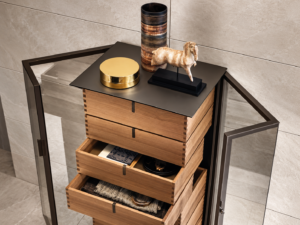
Why Drawer Design Matters
Drawers are where a tall cabinet earns its keep, so they’re worth thinking about before you order.
Drawer Design in a Tall Glass Display Cabinet
Depth decides what fits. Shallow drawers suit jewelry and accessories; deeper ones handle folded clothing or tableware.
Quantity should match how much you want hidden. A display-heavy cabinet might need two drawers; a storage-heavy one might need five or six.
Internal dividers keep small items from sliding around — worth specifying for jewelry.
Soft-close hardware matters more on a tall cabinet, where drawers sit at different heights.
Handles are both functional and visual. Integrated handles keep the front clean; decorative ones add detail.
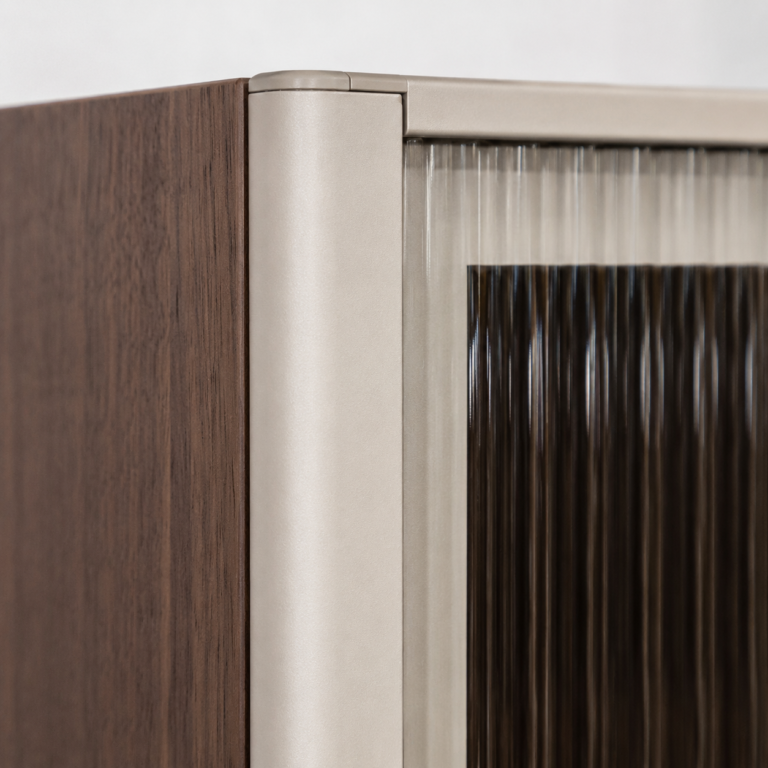
Finish ties the drawers to the rest of the cabinet. Walnut against a black frame feels very different from light oak against champagne aluminium.
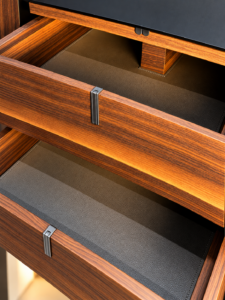
How to Choose the Right Internal Layout
The outside of a tall cabinet looks similar across most designs. The inside is where two cabinets differ completely. Match the layout to what you’ll actually store.
Match the Layout to the Use
For decorative display, you want more open or glass-fronted sections and fewer drawers. The goal is visibility.
For daily storage, you want more drawers and fewer open areas. The goal is keeping things out of sight.
For jewelry or accessories, dividers and shallow drawers work better than deep open shelves.
For books or collectibles, adjustable shelves are the priority, since item heights vary.
A display cabinet and a storage cabinet can look identical from the outside. The difference is entirely internal, which is why this decision should come before production.
Best Applications for an Aluminium Glass Display Cabinet
Where Tall Cabinets Work Best
Living room. Display collectibles, books, and decorative objects up top, with drawers below for everyday items. Works well on narrow walls.
Dining room. Tableware, wine glasses, bottles, and serving pieces sit well behind glass, especially with integrated lighting.
Bedroom. Jewelry, watches, accessories, and folded clothing in one piece. Glass sections display; drawers keep things private.
Hallway. Narrow hallways are where tall cabinets make the most sense — slim footprint, no blocked movement.
Dressing room. Watches, bags, and leather goods display well behind glass, with drawers for items you’d rather cover.
Boutique or showroom. Products stay visible behind glass while stock stays in drawers below.
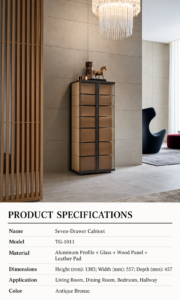
How to Match the Cabinet with Interior Style
Material combinations change the feel of a tall cabinet more than most people expect. The same shape can read warm, cool, minimal, or luxurious depending on the finishes.
What Different Combinations Feel Like
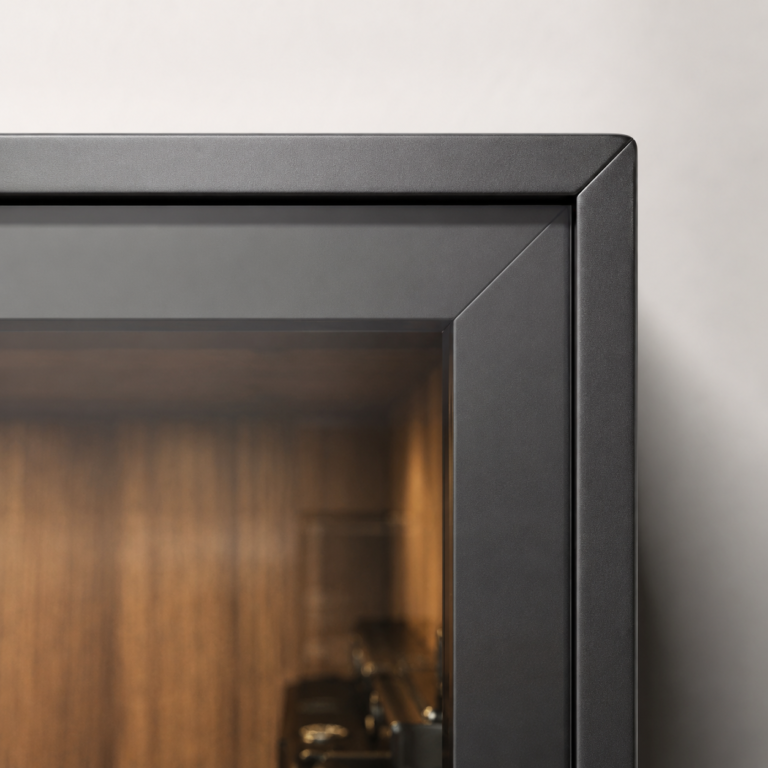
A dark aluminium frame with walnut wood feels grounded and slightly industrial — good with darker flooring or exposed materials.
A clear glass cabinet with warm lighting feels open and inviting, suiting living and dining spaces.
A grey glass front with a dark frame feels restrained and premium — a good fit for bedrooms, dressing rooms, and boutique interiors.
A light wood finish with a champagne frame feels softer and more casual, pairing well with light, Scandinavian-style rooms.
Choose the frame finish, glass type, and wood tone together. Picking one without the other two usually leads to a cabinet that feels slightly off in the room.
What Can Be Customized?
Almost every element can be adapted. The options that matter most on a tall cabinet are:
Height — the defining dimension. Built to ceiling height, below a window, or to fit a specific wall.
Width and depth — depth affects floor space and how much room drawers need to open.
Aluminium finish — black, dark grey, champagne, bronze, silver, or a custom color.
Glass type — clear, tinted, frosted, or fluted, depending on visibility and privacy.
Wood finish — darker tones feel more sophisticated; lighter tones feel softer.
Drawer quantity and layout — adjusted to what you’re storing.
Shelf layout — fixed or adjustable, spaced to match item heights.
Lighting — integrated into selected zones rather than the whole cabinet.
Handle style — from integrated minimalism to visible decorative handles.
Internal dividers — useful for jewelry and small items.
Door opening style — hinged, sliding, or wing-opening, depending on how you want it to work in the room.
What Size Should You Choose?
Size is where most tall cabinet projects go wrong. As a reference, one of our standard models measures H 1383 × W 557 × D 457 mm — mid-height, tall enough for vertical storage, short enough to sit comfortably in most rooms. But it’s only one option.
A Starting Point, Not a Fixed Rule
For hallways, 400–500 mm wide usually works best — storage without blocking traffic.
For bedrooms and dressing rooms, 1300–1600 mm keeps the piece usable without needing a ladder.
For display areas, ceiling-height cabinets can work, but usually need to be fixed to the wall.
Whatever the height, leave clearance for doors and drawers to open fully. And check the finished cabinet can actually reach the room — doorways, stairways, elevators, and corridors are common bottlenecks.
Tall Cabinet vs Wide Cabinet
| Feature | Tall Cabinet | Wide Cabinet |
|---|---|---|
| Floor space | Smaller | Larger |
| Vertical storage | Strong | Moderate |
| Display style | Vertical | Horizontal |
| Best for | Narrow spaces | Large walls |
| Visual effect | Slim and tall | Stable and wide |
A tall cabinet suits limited floor space or storage that shouldn’t take over the room. A wide cabinet makes more sense on a large empty wall where you want a lower, more horizontal piece.
What to Check Before Ordering
The Pre-Order Checklist
Installation space. Measure the wall, check clearance for doors and drawers, confirm walking space.
Cabinet dimensions. Height, width, and depth decided with the room in mind, not just the product photo.
Glass type. Full visibility, partial privacy, or a decorative finish.
Drawer configuration. Number, depth, dividers, and hardware affect daily use.
Door opening style. Hinged, sliding, or wing-opening — this affects clearance.
Lighting. Decide which zones should be lit. Selective lighting usually looks better.
Frame and wood finish. Choose these together with the glass so the materials work as a set.
For larger projects, also plan transportation and installation access. Tall cabinets often need to pass through tight spaces, and it’s easier to solve before production than after.
FAQ
Can a tall aluminium glass cabinet be customized in size?
Yes. Height, width, and depth can all be adjusted to the space and storage needs.
What glass type is best for a display cabinet?
Clear glass offers the highest visibility. Tinted or fluted glass creates a more decorative, partially concealed look.
Can the drawer layout be customized?
Yes. Quantity, depth, dividers, and hardware can all be adapted.
Can LED lighting be added inside the cabinet?
Yes. It can be integrated into specific zones such as display shelves or drawer sections.
How tall can a tall cabinet be?
It depends on the design and ceiling height. Cabinets approaching ceiling height usually need to be fixed to the wall.
What is a wing-opening cabinet?
A cabinet where the doors open outward from the center, like wings, instead of swinging to one side or sliding. It gives full access to the interior from both sides at once.
Conclusion
A tall aluminium glass cabinet works well wherever you need more vertical storage without visually heavy furniture. By combining glass, aluminium, wood, drawers, and lighting, it adapts to both residential and commercial spaces — from living rooms and dressing rooms to boutiques and showrooms.
Get the internal layout, height, materials, and opening style right, and the cabinet does two jobs at once: it stores what you need and looks like part of the room.
Planning a custom tall cabinet project?
Send us your dimensions, preferred glass, frame finish, and storage requirements, and we’ll help you work out a suitable configuration.