
By Linda · Last updated:2026/9/30
Aluminium profiles are behind almost every modern interior system — glass cabinet frames, wardrobe doors, sliding systems, shelving, and partitions. For manufacturers and project buyers, the supplier behind those profiles matters more than most people realize.
Price is the easy part to compare. Profile precision, alloy consistency, machining capability, and finish quality are what decide whether your finished product fits, lasts, and looks the same on unit 500 as it did on unit one.
This guide covers what to check before you commit to a supplier.
Why Aluminium Works in Modern Interiors
Aluminium is light, structurally stable, and easy to shape. That combination makes it useful for both decorative and functional parts of an interior.
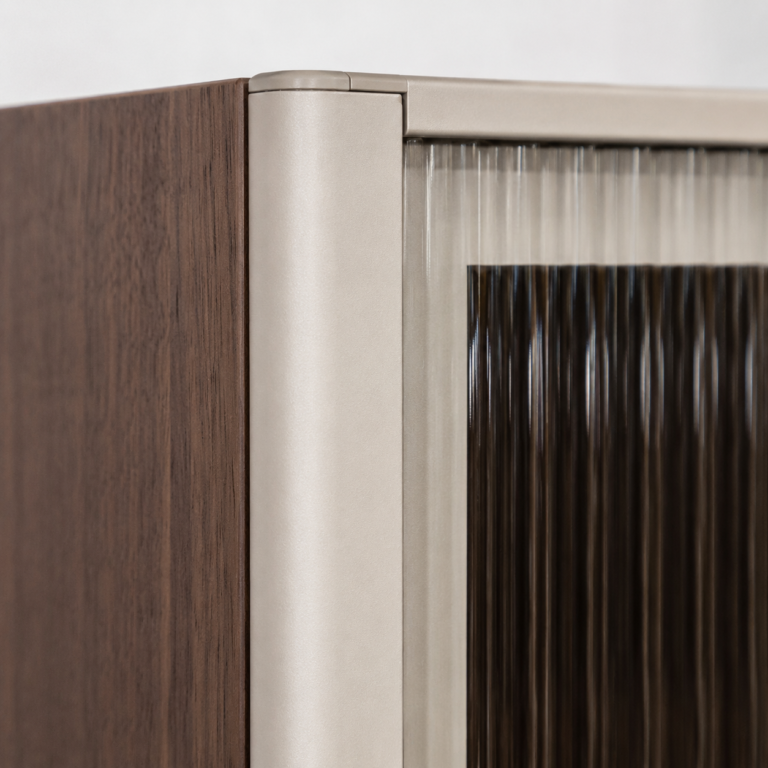
You’ll find it in glass cabinet frames, wardrobe systems, sliding and hinged doors, display cabinets, shelving, furniture frames, and commercial partitions. Compared with many traditional materials, aluminium holds a slim profile while keeping a clean, modern look. It also takes surface treatments well, so it can be matched to glass, wood, leather, and hardware.
That flexibility is why aluminium shows up across so many product types — and why the supplier you choose affects all of them.
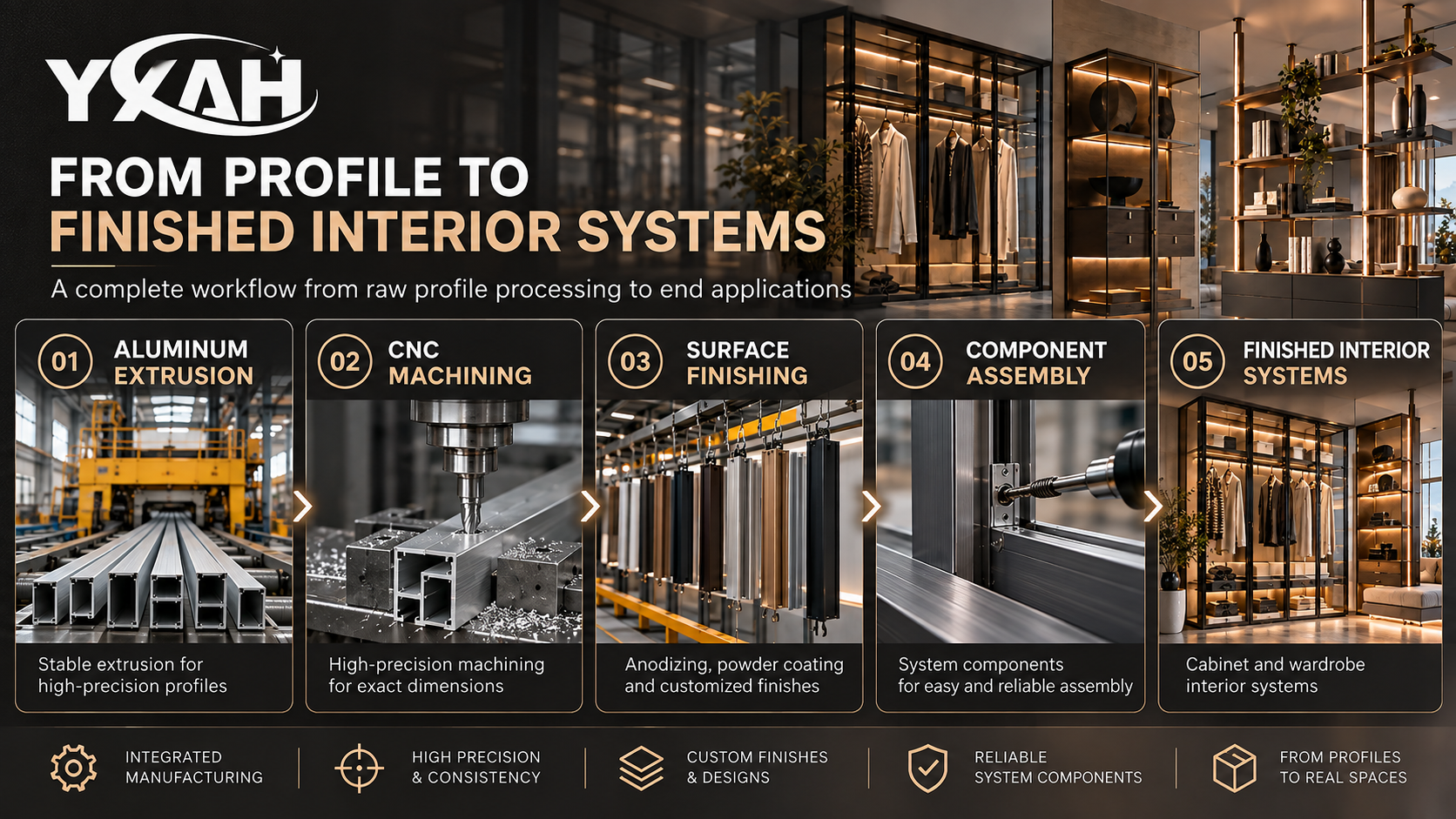
Extrusion Quality: What an Aluminium Profile Supplier Controls
Extrusion is the foundation. If the extrusion process is inconsistent, every step after it inherits the problem.
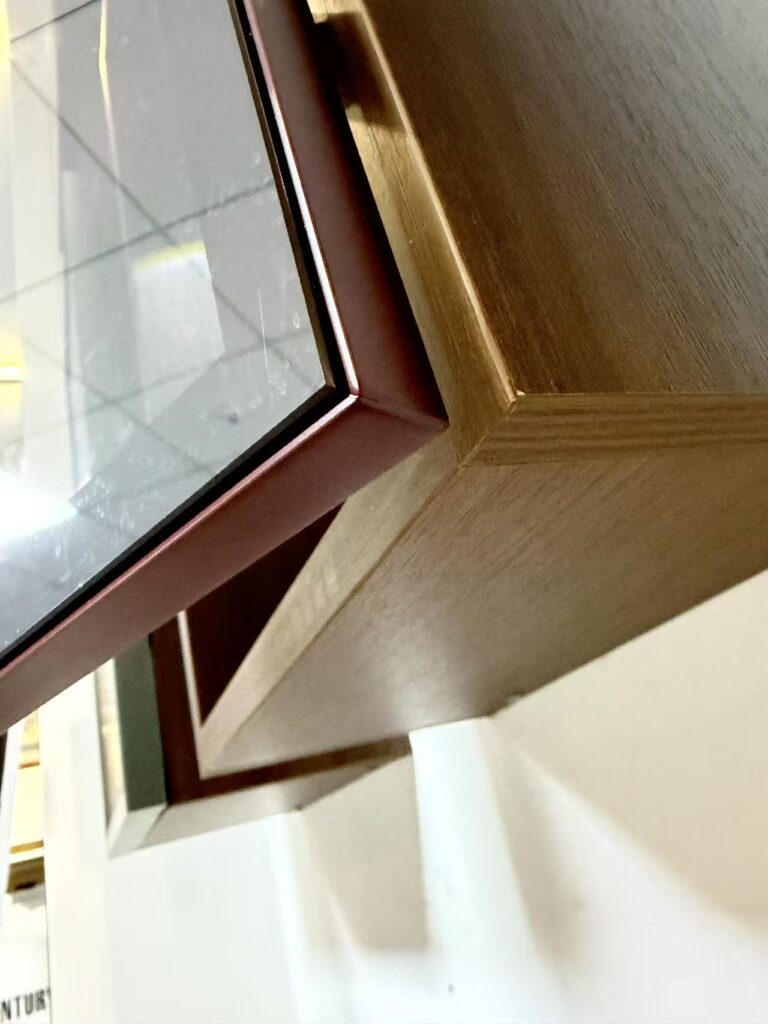
A well-controlled extrusion line gives you consistent cross-section dimensions, straight profiles, smooth surfaces, stable wall thickness, and fewer deformation issues. For furniture and interior systems, small dimensional errors turn into visible gaps, misaligned frames, and installation problems.
This matters most on glass cabinet frames, door profiles, sliding systems, and modular furniture, where parts from different batches have to fit together. A supplier with stable extrusion reduces the amount of rework needed later.
What Stable Extrusion Looks Like
This matters most on glass cabinet frames, door profiles, sliding systems, and modular furniture, where parts from different batches have to fit together. A supplier with stable extrusion reduces the amount of rework needed later.
Choosing the Right Alloy for Aluminium Profiles
Not every project needs the same alloy. A decorative cabinet frame and a structural door frame have different priorities.
For interior and furniture use, buyers usually weigh strength, corrosion resistance, machinability, finish quality, weight, and cost. A good supplier will recommend an alloy and temper based on what the profile actually has to do — not just offer one standard option for everything.
If a supplier can’t explain why they’re recommending a specific alloy, that’s a sign they’re not thinking about your application.
How Aluminium Profile Precision Affects the Finished Product
For OEM and custom projects, precision is where suppliers separate themselves.
The dimensions that matter most include profile width, wall thickness, groove dimensions, glass channels, screw positions, and connection areas. If any of these vary between batches, the finished cabinet or door won’t assemble cleanly.
Before mass production, drawings and tolerances should be confirmed in writing. Ask how the supplier inspects dimensions, and whether they have documented procedures or just verbal assurances.
CNC Machining for Custom Aluminium Profiles
Extrusion is only the first step. Most interior systems also need cutting, drilling, milling, slotting, tapping, and corner preparation.
When the profile supplier also handles CNC machining, you cut down the number of vendors in the project. That usually means better dimensional consistency, faster production, more accurate assembly, and easier lead-time control.
For cabinet, wardrobe, and door manufacturers, receiving ready-to-assemble aluminium components can simplify the whole production line — especially on repeat orders where consistency matters more than speed.
Surface Finish Options for Aluminium Profiles
Finish is where aluminium profiles become part of the design.
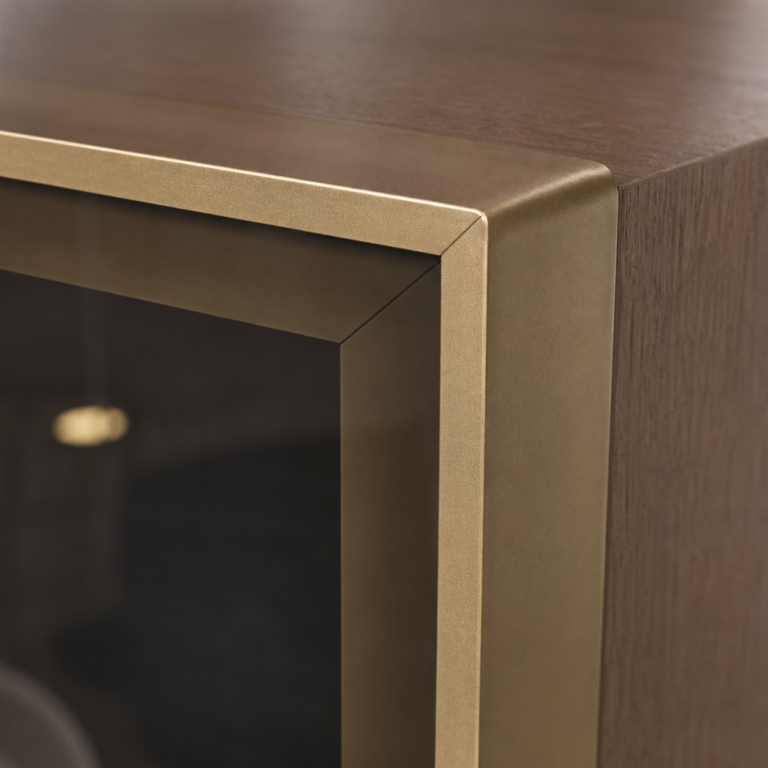
Common options include anodizing, powder coating, brushed and matte finishes, metallic finishes, and custom colors. Popular interior tones include black, champagne, bronze, silver, grey, and titanium.
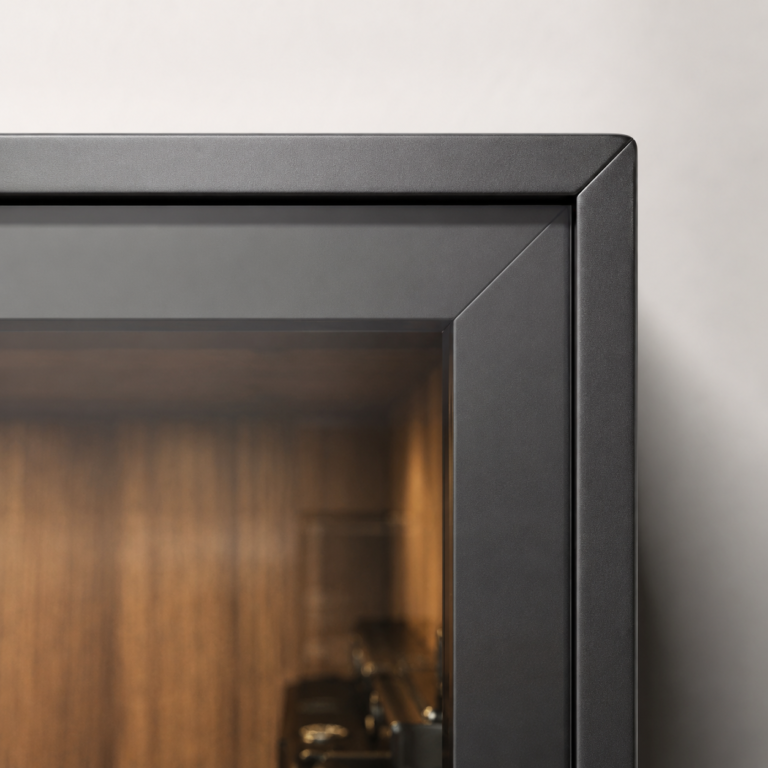
Different finishes change the feel of a product. A black frame works well with clear glass and dark wood. Champagne or bronze tones suit warmer, more luxurious interiors. The finish also needs to be consistent across batches — a champagne frame that reads slightly different from the champagne handle is a problem you’ll notice on installation day.
For projects where profiles need to match wood, glass, or hardware, color consistency is worth confirming before production.
Custom Aluminium Profiles for Interior Systems
Standard profiles cover basic applications. Custom profiles are usually necessary when the product needs a specific look, assembly method, or branding.
Customization can cover profile shape, wall thickness, groove dimensions, connection structure, decorative lines, finish, length, and machining positions. For furniture manufacturers, custom profiles can create a more distinctive product and integrate functional features directly into the profile — which often improves assembly efficiency at the same time.
The trade-off is tooling, MOQ, and lead time. Custom profiles usually require new tooling and a longer initial production window, so it’s worth planning for that early.
| Feature | Standard Profile | Custom Profile |
|---|---|---|
| Tooling | Existing | New tooling may be required |
| MOQ | Usually lower | Usually higher |
| Lead time | Shorter | Longer at first |
| Design freedom | Limited | High |
| Application | General | Project-specific |
| Branding | Limited | Better differentiation |
| Assembly optimization | Basic | Can be built into the design |
Why an Aluminium Profile Supplier Should Understand Finished Systems
The most useful suppliers aren’t just extruders. They understand how profiles are used in finished products.
A supplier familiar with glass cabinets, wardrobes, display cabinets, interior doors, shelving, and furniture systems can give practical input during product development. That’s different from simply supplying raw aluminium.
They can think through the full chain — profile design, machining, glass fit, hardware connection, assembly, and finished appearance — and flag problems before they show up in production. For OEM and custom projects, that input often saves more time than a lower quote does.
If you’re working on a cabinet or door project, see our guides to custom aluminium glass cabinet and custom aluminium glass doors for how these profiles are used in finished products.
How to Evaluate an Aluminium Profile Supplier
Before ordering, work through these points.
Production capability. Can they handle both standard and custom extrusion?
Machining capability. Do they offer cutting, drilling, and CNC machining in-house, or do they outsource?
Surface treatment. What finishes and colors are available, and can they be matched across a project?
Quality control. How do they inspect dimensions, surfaces, and finished profiles? Ask for documented procedures.
Customization. Can they work from drawings or samples?
MOQ. This varies by tooling, color, and profile design — get a clear number before quoting.
Lead time. Confirm both sample and mass production schedules.
Packaging. Profiles need protection against scratches and deformation during transport, especially on long lengths.
What to Send for an Accurate Quote
The more technical information you provide upfront, the more accurate the quote will be.
Useful details include the profile drawing, cross-section dimensions, alloy and temper requirements, profile length, surface finish, color, machining requirements, quantity, application, and packaging requirements.
If you don’t have a drawing, a sample or a reference to the finished product can still help the supplier understand what you need.
FAQ
Can aluminium profiles be customized from a drawing?
Yes. Custom extrusion can be developed from technical drawings, dimensions, or product samples.
Can profiles be supplied with CNC machining?
Depending on the supplier, services may include cutting, drilling, milling, tapping, and other machining processes.
What surface finishes are available?
Common options include anodizing, powder coating, brushed finishes, and custom colors.
Can aluminium profiles be used for glass cabinets and wardrobes?
Yes. They’re widely used in cabinet frames, wardrobe doors, glass display systems, and other interior applications.
What information is needed for a quotation?
Profile dimensions, alloy, finish, length, quantity, machining requirements, and application details are usually required.
Conclusion
Choosing an aluminium profile supplier isn’t just about raw material cost. Extrusion quality, precision, CNC capability, surface finishing, and customization all shape the final product — and the supplier who understands how profiles are used in finished interiors can save you more time than a lower quote ever will.
If you’re developing custom aluminium profiles for cabinets, wardrobes, glass doors, furniture, or interior systems, send your drawings, dimensions, finish requirements, and expected quantity, and we’ll help you work out a suitable solution.